

Why GRIT Matters More Than Talent: Building Kids Ready for Any Sport, Any Challenge

A Coach and Father's Perspective on Raising Resilient Athletes
By Peyton Kay, Founder & Director, THE GRIT Academy
As we enter the winter season, I want to share something I've learned in my 25 years of coaching youth sports and raising five active boys of my own: the kids who succeed aren't always the most naturally talented. They're the ones with GRIT - the determination to keep going when things get tough, the resilience to bounce back from setbacks, and the courage to try new things even when they're scared.
I've watched this truth play out hundreds of times, both in my gym and at my own dinner table. The kid who can barely dribble a basketball at age six but shows up every week with enthusiasm? By age ten, they're leading their team. The child who falls off the balance beam repeatedly but gets right back up? They're the one who develops unshakeable confidence. The athlete who loses game after game but keeps practicing? They're building something far more valuable than a trophy case - they're building character.
"The goal isn't to create professional athletes. The goal is to create kids who know how to work hard, handle adversity, and believe in themselves."
Lessons from the Sidelines and the Dinner Table
As a father of five boys, I've had a front-row seat to what really matters in youth athletics. I've seen my own kids struggle, fail, triumph, and grow. I've been the coach who had to tell my son he wasn't starting in the big game. I've been the dad who had to watch his child sit on the bench, fighting back my own disappointment while trying to model the right attitude. I've driven to countless early morning practices, stood on cold sidelines, traveled to tournaments across the country, and celebrated victories and mourned defeats right alongside them.
My sons have played soccer, basketball, tennis, competed in track, and rowed crew. Each sport taught them something different. Soccer taught them endurance and teamwork. Basketball taught them quick decision-making and spacing. Tennis taught them individual accountability and mental toughness. Track taught them that you're competing against yourself as much as anyone else. Rowing taught them that perfect synchronization and trust in your teammates is everything.
Today, my two younger sons are nationally ranked USTA junior tennis players in their respective divisions - Boys 12U and Boys 14U. Watching them compete at that level has given me incredible insight into what it takes to excel: it's not just talent, it's dedication, mental toughness, and an unwavering commitment to improvement. The hours they've invested, the matches they've lost and learned from, the mental battles they've fought on the court - all of it has shaped them into not just better players, but better people.
My oldest son's journey is perhaps the most powerful testament to following your passion and building GRIT. He played Division I rugby at Northeastern University, where he learned what it truly means to compete at an elite level. After graduation, he took what many would consider a 'dream job' at Bank of America. But his heart wasn't in finance - it was in coaching and teaching young athletes.
So he made a choice that embodied everything we teach at GRIT Academy: he left that prestigious job to pursue his true calling. Today, he serves as the General Manager of The GRIT Academy, and his impact extends far beyond our walls. He also founded and runs the Hudson County Basketball Association (HCBA), a local non-profit organization that provides hundreds of kids each week with the opportunity to learn the game of basketball, and the Hudson County Sports League, which promotes middle school basketball throughout our community. He also runs Beast Coast Academy, a specialized basketball skills program. His commitment to developing young athletes through multiple platforms shows what's possible when someone combines talent, work ethic, and genuine passion for making a difference.
This is what GRIT looks like in real life - having the courage to pursue what matters to you, the resilience to build something meaningful, and the integrity to give back to your community. My sons have taught me as much as I've taught them.
Here's what these experiences taught me: sports are just the vehicle. The real destination is raising kids who are mentally tough, physically capable, emotionally resilient, and ready for whatever life throws at them. Whether they end up playing Division I athletics, competing nationally in their sport, pursuing a professional career, or taking a completely different path, the lessons they learn on the court, field, or gym floor will serve them for life.
What I learned watching my boys is that it's not about being the best at one sport. It's about learning to use your body, challenge yourself, compete with integrity, and discover what you're capable of when you refuse to quit. Some of my sons gravitated toward team sports, others toward individual competition. One found his calling on the water, others on the court and track. But all of them learned the same fundamental lesson: you get better by showing up, trying hard, and pushing through discomfort.
What is GRIT?
GRIT stands for Growth, Resilience, Integrity, and Teamwork. It's not just about sports - it's a mindset that helps kids thrive in school, friendships, and life. When kids develop GRIT, they learn that effort matters more than natural ability, that mistakes are opportunities to learn, and that they can handle more than they think.
Let me break down what each component means in practice:
Growth
Growth is about embracing the journey of improvement. It's the understanding that nobody starts as an expert, and that's okay. Every professional athlete was once a clumsy beginner. Every Olympic champion has a story about failing before they succeeded. When kids develop a growth mindset, they stop saying 'I can't do this' and start saying 'I can't do this yet.' That single word - yet - changes everything.
My nationally ranked tennis players weren't born with perfect serves. They developed them through thousands of hours of practice, countless missed shots, and an unwavering belief that they could improve. That's growth mindset in action.
At THE GRIT Academy, we celebrate progress over perfection. Did you improve your skateboard balance by staying on three seconds longer? That's worth celebrating. Did you finally stick that cartwheel after 20 attempts? That's a victory. Can you now climb three obstacles on the ninja course when you could only do one last month? That's growth, and that's what we're here for.
Resilience
Resilience is the ability to bounce back from disappointment, failure, or adversity. In sports, resilience looks like falling off a skateboard and immediately getting back on. It's missing a tennis serve fifteen times in a row and stepping up for the sixteenth. It's failing to complete a ninja obstacle and trying a different approach. It's losing a basketball game and showing up to practice the next day ready to work.
I've watched my tennis-playing sons lose tough matches - sometimes matches they should have won. The resilience they've developed allows them to process the disappointment, analyze what went wrong, and come back stronger. That's a skill that will serve them far beyond the tennis court.
But resilience extends far beyond athletics. A resilient child is one who can handle a bad grade, a friendship conflict, or a family challenge without falling apart. They feel the disappointment - we never want to minimize real emotions - but they don't let it define them or stop them from moving forward.
Research consistently shows that resilience is one of the strongest predictors of long-term success and well-being. Kids with resilience don't just survive hardship; they grow from it. They develop what psychologists call 'stress inoculation' - small doses of manageable challenge that prepare them for bigger obstacles down the road.
Integrity
Integrity means doing the right thing, even when no one is watching. It's admitting when you touched the line during a race, even if the coach didn't see it. It's being honest about whether you really completed all your conditioning exercises. It's congratulating the other team when they win. It's treating teammates with respect, even when you're frustrated. It's helping a younger kid on the ninja course even when you want to keep practicing your own skills.
In tennis, integrity is essential - players make their own line calls. My sons have had to learn to call balls against themselves even in crucial moments. That's character building at its finest. When my oldest son left a lucrative career to pursue his passion for coaching, that was integrity - choosing purpose over prestige, impact over income.
In a world where winning often seems to matter more than anything else, teaching integrity can feel countercultural. But I've seen what happens to kids who learn to cut corners or bend rules - they might win in the short term, but they lose something far more valuable: their character and the respect of others.
At GRIT Academy, we have a saying: 'Champions are made in practice, not just in games.' That means showing up when it's hard, giving full effort even in drills, and being honest about your performance. Kids who develop integrity become the adults everyone wants on their team, in their company, and in their community.
Teamwork
Teamwork is about understanding that we're better together than alone. It's learning to pass the ball to the open teammate instead of forcing a difficult shot. It's cheering for your teammates even when you're not on the court. It's helping a less skilled player improve rather than getting frustrated with them. It's spotting someone on a complicated gymnastics skill. It's encouraging your friend when they're struggling with a skateboarding trick you've already mastered.
The ability to work effectively with others is perhaps the most critical skill we can teach kids. In virtually every career, every community, every relationship, success depends on collaboration. My son, who rowed crew, learned this lesson viscerally - eight rowers must move in perfect synchronization, or the boat doesn't move efficiently. My son who played Division I rugby learned that individual talent means nothing if the team doesn't function as a unit.
Even in individual sports like tennis or skateboarding, teamwork matters. Tennis players need to trust their doubles partner. Skateboarders cheer each other on and share tips. My nationally ranked tennis players practice with hitting partners, work with coaches, and support each other through the mental challenges of tournament play. At GRIT Academy, we intentionally create community even within individual pursuits because that's how kids learn that success is sweeter when shared.
Watching my oldest son build multiple youth sports programs in Hudson County - GRIT Academy, Hudson County Basketball, Hudson County Sports League, and Beast Coast Academy - has shown me teamwork on a larger scale. He's creating networks of coaches, volunteers, and families all working together toward a common goal: giving kids opportunities to develop through sports.
"We're not just building athletes. We're building leaders, problem-solvers, and resilient human beings who know how to work hard and lift others up."
The GRIT Academy Approach: Why These Five Sports?
At THE GRIT Academy, we've carefully chosen five core disciplines that work together to develop complete athletes: parkour and ninja training, gymnastics, basketball, tennis, and skateboarding. This isn't a random collection - it's a strategic combination designed to build every aspect of athleticism while keeping kids engaged and excited.
Each sport addresses different physical, mental, and social skills. Together, they create a comprehensive athletic foundation that prepares kids for anything they want to pursue.
Let me explain why each one matters:
Parkour and Ninja Training: Building Fearless Problem-Solvers
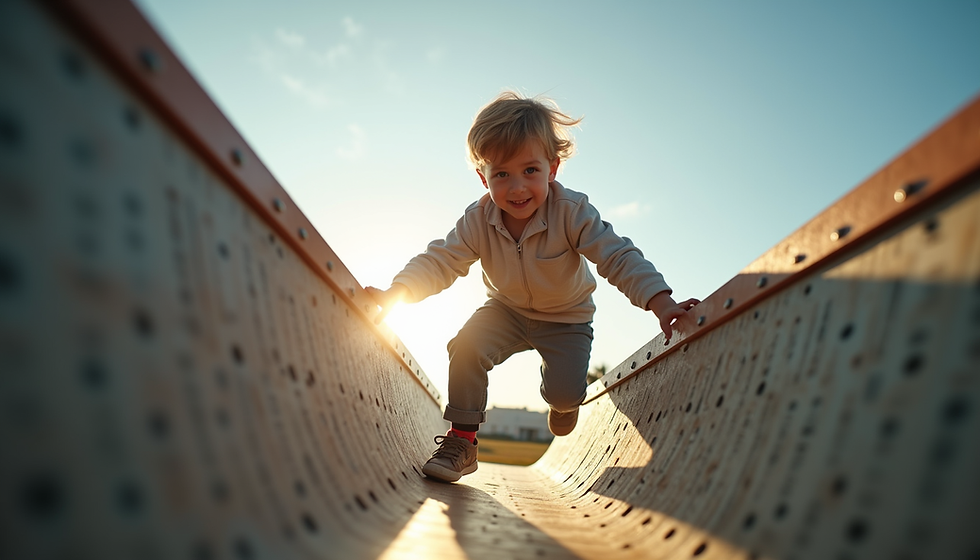
Parkour and ninja training are the ultimate confidence builders. When a child looks at an obstacle course - a series of walls to scale, bars to swing across, balance beams to navigate - they're not just seeing physical challenges. They're learning to assess problems, strategize solutions, and execute plans. This is problem-solving in motion.
What Parkour and Ninja Training Develops:
• Full-body strength: Every muscle group gets worked as kids climb, swing, jump, and balance
• Spatial awareness: Kids learn to judge distances, heights, and their body position in three-dimensional space
• Grip strength: Essential for nearly every sport and everyday activities
• Creative thinking: There's rarely just one way to complete an obstacle - kids learn to find their own path
• Courage: Facing and overcoming fear is built into every session
• Persistence: Most obstacles require multiple attempts to master
I've watched kids who were initially terrified to climb even the smallest wall transform into confident athletes who tackle complex obstacle courses with determination and strategy. The moment when a child finally conquers an obstacle they've been working on for weeks? That's pure gold. You can see their whole demeanor change - they stand taller, smile bigger, and immediately look for the next challenge.
Parkour and ninja training also teaches kids that falling and failing are part of the process. They're literally learning to fall safely, get back up, and try again. That's resilience in action. And because obstacle courses are so varied and creative, kids who might not excel at traditional ball sports often discover they're naturals at ninja training. We've seen countless kids find their confidence here first, then carry that confidence into other sports.
Gymnastics: The Foundation of Body Control
Gymnastics is the foundation of all athletic movement. Every flip, roll, cartwheel, and handstand teaches kids how to control their bodies through space. Coaches often call gymnastics the 'mother of all sports' because the body awareness and control it develops transfers to literally everything else.
What Gymnastics Develops:
• Balance: From walking on beams to holding handstands, kids develop extraordinary balance
• Flexibility: Essential for injury prevention and athletic performance in all sports
• Core strength: Nearly every gymnastics skill requires a strong core
• Body awareness: Kids learn where every part of their body is without looking
• Precision: Gymnastics rewards exactness and attention to detail
• Discipline: Proper form and technique are non-negotiable
• Proprioception: The ability to sense body position, crucial for all athletic movements
Gymnastics also teaches kids to be coachable. Because proper technique is so essential for safety and progression, kids learn to listen carefully to instructions, focus on details, and practice deliberately. These skills transfer beautifully to any sport or activity they pursue later. In fact, the body control my sons developed through various athletic pursuits, including gymnastics fundamentals, has helped them excel in their respective sports at higher levels.
What I love most about gymnastics is how it democratizes athleticism. A smaller, lighter kid often has advantages in gymnastics that they might not have in basketball or other sports. It gives every child a chance to discover an area where their body type is an asset, which is incredibly empowering.
Basketball: The Ultimate Team Sport
Basketball is fast, dynamic, and endlessly engaging for kids. It's also one of the best sports for developing both athletic skills and social intelligence. The game requires constant communication, quick decision-making, and awareness of five players on offense and five on defense - all moving simultaneously.
My oldest son's passion for basketball has led him to create multiple programs serving Hudson County youth. Through Hudson County Basketball, Hudson County Sports League, and Beast Coast Academy, he's touching hundreds of young lives, teaching them not just basketball skills but life lessons about teamwork, dedication, and community service. His commitment shows the lasting impact basketball can have when taught with purpose and passion.
What Basketball Develops:
• Hand-eye coordination: Dribbling, passing, and shooting all require precise coordination
• Court vision: Learning to see the whole floor and anticipate movement
• Quick decision-making: Basketball happens fast - kids learn to assess and act instantly
• Teamwork: No one can win a basketball game alone - cooperation is essential
• Communication: Calling out picks, switches, and plays teaches verbal leadership
• Cardiovascular endurance: Constant running up and down the court builds serious stamina
• Footwork: Pivoting, cutting, and defensive slides create agile athletes
Basketball is also incredibly accessible. You need a ball and a hoop - that's it. Kids can practice alone or with friends. They can play full-court games or work on skills in a driveway. This accessibility means kids can continue developing their skills outside of structured practice, which accelerates improvement.
One of the most valuable lessons basketball teaches is reading the game. Players need to assess constantly: Should I shoot? Should I pass? Should I drive? Should I set a screen? This kind of real-time strategic thinking is incredibly valuable in all areas of life. My sons, who played basketball, learned decision-making skills that served them well in academic and social situations far from the court.
Tennis: Mental Toughness and Individual Accountability
Tennis holds a special place in our program and in my heart. Watching two of my sons compete nationally has given me profound insight into what this sport teaches. Tennis is unique because it's primarily individual - in singles play, the outcome rests squarely on one player's shoulders. This creates a different kind of pressure and a different kind of growth.
What Tennis Develops:
• Mental toughness: There's no one to blame, no one to substitute in - you must dig deep
• Hand-eye coordination: Tracking and hitting a moving ball requires exceptional coordination
• Strategy: Reading opponents, placing shots, and managing points strategically
• Emotional regulation: Managing frustration when things aren't going your way is critical
• Footwork and agility: Constant movement in multiple directions builds quickness
• Patience: Tennis rewards those who wait for the right shot rather than forcing
• Sportsmanship: Tennis has a strong culture of respect and etiquette
I've had the privilege of watching my two younger sons rise through the ranks to become nationally ranked USTA junior players in Boys 12U and Boys 14U. The journey hasn't been easy - it's required thousands of hours of practice, countless early mornings, tournaments across the country, tough losses, and constant mental and physical challenges. But watching them develop has shown me exactly what we're trying to teach at GRIT Academy.
Tennis taught them that they're in control of their outcomes. When they lose, they can't blame teammates or always rely on bad calls - they have to look at their own performance and figure out what to improve. When they win, they know it's because of their preparation and execution. That sense of ownership is incredibly empowering and translates to every area of life.
Tennis also teaches kids to manage their internal dialogue. In a sport where points can stretch long and matches can last hours, the voice in your head matters tremendously. My sons have learned to stay positive, refocus after mistakes, and maintain confidence even when trailing. These mental skills are life skills that they'll use forever, whether they continue competing or not.
Another benefit of tennis is its longevity. Unlike many team sports that become difficult to play recreationally after school, tennis is a sport you can play for life. The skills we teach kids now can provide decades of enjoyment, fitness, and social connection.
Skateboarding: Creativity, Courage, and Progression
Skateboarding is the newest addition to our program, but it's quickly become one of the most popular. There's something about skateboarding that appeals to kids in a unique way - it's expressive, creative, and carries a sense of freedom and individuality that traditional sports sometimes lack.
What Skateboarding Develops:
• Balance and stability: Maintaining balance on a moving board develops extraordinary stability
• Courage: Every new trick requires overcoming the fear of falling
• Persistence: Landing a new trick often takes hundreds of attempts
• Creativity: Unlike rule-bound sports, skateboarding encourages personal expression
• Core strength: Maintaining balance requires constant core engagement
• Spatial awareness: Understanding how your body and board move through space
• Community: Skate culture emphasizes support, respect, and progression together
Skateboarding teaches failure in the most direct way possible. You're going to fall. A lot. And that's okay. Kids learn quickly that falling is part of skateboarding, and they develop both the physical skills to fall safely and the mental resilience to get back up and try again.
What I love most about skateboarding is how it attracts kids who sometimes feel left out of traditional sports. The kid who's not interested in team sports, or who feels too small or uncoordinated for basketball - they often find their home in skateboarding. It gives them a way to be athletic, challenged, and part of a community on their own terms.
Skateboarding also teaches incremental progression beautifully. Kids start by just standing on the board and rolling. Then they learn to push. Then to turn. Then to stop. Then basic tricks. Each milestone is clear, achievable, and builds toward the next. This creates a perfect feedback loop of challenge and reward that keeps kids motivated and engaged.
"These five sports aren't competing with each other - they're complementing each other, creating well-rounded athletes who are ready for anything."
Why Multi-Sport Training Matters More Than Ever
One of the biggest mistakes I see in youth sports today is early specialization. Parents and coaches push kids to focus on a single sport at age seven or eight, believing that's the path to excellence. The research tells a different story, and my 25 years of experience - both as a coach and as a father of athletes competing at high levels - confirms it: kids who play multiple sports are more likely to stay active longer, get fewer injuries, develop better overall athleticism, and actually perform better in their chosen sport when they do eventually specialize.
Even as my sons pursued tennis at increasingly competitive levels, they continued playing other sports for as long as possible. The agility they developed in basketball helped their court coverage in tennis. The core strength from various athletic pursuits improved their serve power and stability. The mental toughness from competing in different contexts made them better competitors overall.
At The GRIT Academy, our multi-sport approach is intentional and strategic. Each of our five core disciplines develops different but complementary skills:
• The body awareness and flexibility from gymnastics makes kids better at parkour and prevents injuries in basketball and tennis
• The balance and core strength from skateboarding translates directly to better stability in tennis and quicker direction changes in basketball
• The grip strength and problem-solving from parkour and ninja builds mental toughness that helps in the individual pressure of tennis
• The teamwork and communication from basketball creates supportive skate culture and collaborative parkour sessions
• The mental toughness and strategic thinking from tennis helps kids push through challenging obstacle courses and stick with complicated skateboarding tricks
When a child experiences diverse athletic challenges, they develop what I call a 'movement vocabulary' - a broad range of ways their body can move effectively. This creates athletes who are adaptable, creative, and capable. They're not just good at one specific skill set; they're athletically literate.
Beyond the physical benefits, multi-sport training does something even more important: it helps kids discover what they love. I've seen countless children come to GRIT Academy thinking they were 'not athletic' because they struggled in one particular sport, only to discover they're naturals at something else. Every child is an athlete - they just need to find their sport, their challenge, their way of moving through the world with confidence and joy.
Teaching Kids to Be Competent in Their Bodies
We live in an increasingly sedentary world. Kids spend more time than ever sitting in school, in cars, on couches, in front of screens. Many children today reach adolescence without ever learning to run correctly, jump confidently, or maintain balance. They've never climbed a tree, crossed monkey bars, done a cartwheel, or even fallen safely.
This isn't just about sports performance - it's about basic physical literacy. Kids who are comfortable and competent in their bodies are more confident in all areas of life. They're more willing to try new things, more comfortable in social situations, and more resilient when faced with physical challenges.
At GRIT Academy, we focus heavily on fundamental movement patterns across all our disciplines. Our five sports work together to ensure kids develop complete physical literacy - from running mechanics to jumping and landing, from throwing and catching to balance and stability, from climbing to rolling safely.
I want kids leaving our programs knowing they can trust their bodies. I want them to feel capable and strong. I want them to approach physical challenges with excitement rather than anxiety.
How We Build GRIT at the Academy
Everything we do at THE GRIT Academy is designed with these principles in mind. Here's how we put GRIT into practice every single day:
We Celebrate Effort, Not Just Outcomes
A kid who tries their hardest and misses the shot gets the same recognition as the one who makes it. A child who attempts a skateboard trick and falls gets cheered just as loudly as the one who lands it. We have a 'Hustle Award' that goes to the player who showed the most effort, regardless of skill level.
This is crucial because kids are smart - they know when they're less skilled than their peers. If we only celebrate winners, the naturally talented, or those who complete obstacles fastest, we lose the kids who need us most. But when we celebrate effort, improvement, courage, and heart, every child has a path to recognition and success.
We Normalize Failure
Every coach at GRIT Academy has a 'favorite failure' story they share with kids. Our General Manager - my oldest son - shares about his Division I rugby matches where his team lost in heartbreaking fashion, and how those losses taught him more than victories ever could. I tell kids about watching my nationally ranked sons lose tough tennis matches and how they bounced back stronger.
We reframe language around failure. Instead of 'You failed,' we say 'That didn't work yet - what will you try differently?' Instead of 'You're not good at this,' we say 'You're still learning this skill.'
We Give Kids Just-Right Challenges
Not too easy, not too hard - challenges that stretch them and build confidence. In basketball, we might have three different shooting distances based on skill level. On the ninja course, advanced kids tackle the full circuit while beginners work on individual obstacles. In skateboarding, some kids are learning basic balance while others are attempting tricks.
This approach prevents both boredom and frustration. Kids stay engaged because they're working at the edge of their ability, where learning happens fastest and confidence grows strongest.
We Build Community
Kids support each other, cheer for teammates, and learn that we're stronger together. This philosophy extends beyond GRIT Academy - through Hudson County Basketball, Hudson County Sports League, and Beast Coast Academy, we're building a community of young athletes throughout Jersey City who support and challenge each other to grow.
The friendships kids build at GRIT Academy often extend beyond our walls. That sense of belonging and community is just as important as any athletic skill we teach.
"When kids learn they can do hard things - whether it's conquering a ninja course, landing a skateboard trick, or winning a close tennis match - they develop confidence that spills into every area of their lives."
Join Us in Building GRIT
This winter, I invite you to join us in building GRIT - not just in our gym, but at home too. Whether your child is already part of the GRIT Academy family or you're considering joining us, the principles I've shared here apply anywhere.
As a coach who has worked with thousands of kids over 25 years and as a father who has raised five sons - including two nationally ranked tennis players and one who chose to dedicate his career to youth development - I can tell you with certainty: the investment you make in your child's physical, emotional, and character development during these foundational years will pay dividends for the rest of their lives.
The goal isn't to create professional athletes, though some of our kids may reach that level. The goal is to create kids who know how to work hard, handle adversity, work with others, and believe in themselves. Kids who are physically confident and emotionally resilient. Kids who try new things without fear of failure. Kids who compete with integrity and celebrate others' success. Kids who understand that effort matters more than talent, and that character matters more than winning.
In other words, kids with GRIT.
"Every child is an athlete. Every child can develop GRIT. Every child deserves the chance to discover what they're capable of when they refuse to quit."
About the Author
Peyton Kay is the founder and director of The GRIT Academy in Jersey City, New Jersey. With over 25 years of experience coaching youth sports, Peyton has dedicated his career to helping children develop the physical skills, mental toughness, and character traits that lead to success in sports and in life.
As a father of five active boys - including two nationally ranked USTA junior tennis players (Boys 12U and Boys 14U) and a Division I rugby player from Northeastern University who now serves as GRIT Academy's General Manager - Peyton brings both professional expertise and personal experience to his coaching philosophy. His sons have competed in soccer, basketball, tennis, track, and rowing, giving him unique insight into the demands and benefits of youth athletics at all levels.
The GRIT Academy offers specialized training in parkour and ninja, gymnastics, basketball, tennis, and skateboarding, along with camps, afterschool clubs, and birthday parties designed to build confident, resilient young athletes. The Kay family's commitment to Jersey City youth sports extends beyond GRIT Academy through Hudson County Basketball (a local non-profit), Hudson County Sports League (promoting middle school basketball), and Beast Coast Academy (a basketball skills program).

Learn more at www.thegritacademy.com
Ready to build GRIT with your child?
Contact THE GRIT Academy today to learn about our winter programs.
Email: info@gritacademy.com | Phone: (201) 596-6626

Comments